Machine scheduling: avoid double-booking excavators and cranes
Equipment is expensive idle and expensive when it is in the wrong place twice. Machine scheduling is the discipline of matching each asset to a date range while respecting service, transport, and who else thought they had it Thursday morning.
This article focuses on habits and data you need in one place—not brand loyalty. We reference Resursplanen because it explicitly includes machine planning alongside people, which mirrors how Nordic sites often run: the same planner moves crews and buckets in one view.
Why machines need their own calendar
People schedules hide downtime that still blocks work: a breaker that shares the excavator, a low-loader returning a day late, or a city centre lift window that moves. Treat machines as named resources with their own unavailability, not as notes in a cell.
If maintenance lives on a whiteboard near the yard, copy those dates into the digital plan everyone trusts. Otherwise the workshop and the project office will keep solving different problems.
Booking rules that prevent drama
Use one booking per machine per day unless the asset truly splits shifts. Partial overlaps (“morning on site A, afternoon on site B”) should be visible as two blocks so transport and fueling show up.
Name a default owner who can move bookings when weather slips. Ambiguity is what creates double bookings—not the software.
How Resursplanen approaches machine planning
Resursplanen markets machine planning together with people: you see bookings, availability, and maintenance-style gaps in a shared timeline. That matters because crews and iron move together—splitting them across tools invites clashes.
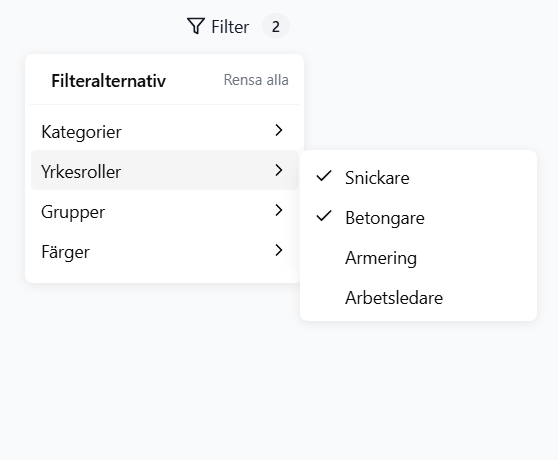
Whether you adopt it or not, copy the pattern: machines appear in the same system where you argue about people, with filters so yard managers can see only equipment. The earlier screenshot of structured filters is as relevant for machine categories as for trades.
Metrics worth watching
Utilisation by week, idle hours between moves, and repeat rush rentals are signals that planning assumptions are off. You do not need a full BI stack—export weekly and chart three numbers.
If utilisation is high but projects still slip, you likely have a sequencing problem, not a shortage of iron.
Learn more: resursplanen.se